
How to Read Flow Sensor Specifications: A 2026 Buyer's Guide to Parameters and Quality
How to Read Flow Sensor Specifications: A 2026 Buyer's Guide to Parameters and Quality
When procuring flow sensors for medical, bioprocess, or industrial automation applications, OEM buyers often face a critical challenge: how do you interpret the technical specifications on a datasheet and, more importantly, how does the manufacturing process affect real-world performance? This guide is designed to answer those exact questions.
We will demystify key parameters such as accuracy, range, and material compatibility, and then connect them directly to production quality — from calibration standards to patented assembly methods. Whether you are evaluating a clamp-on flow sensor or an in-line meter, understanding these factors will help you select a reliable supplier and avoid costly field failures.
What Is a Flow Sensor? Definition and Core Technology
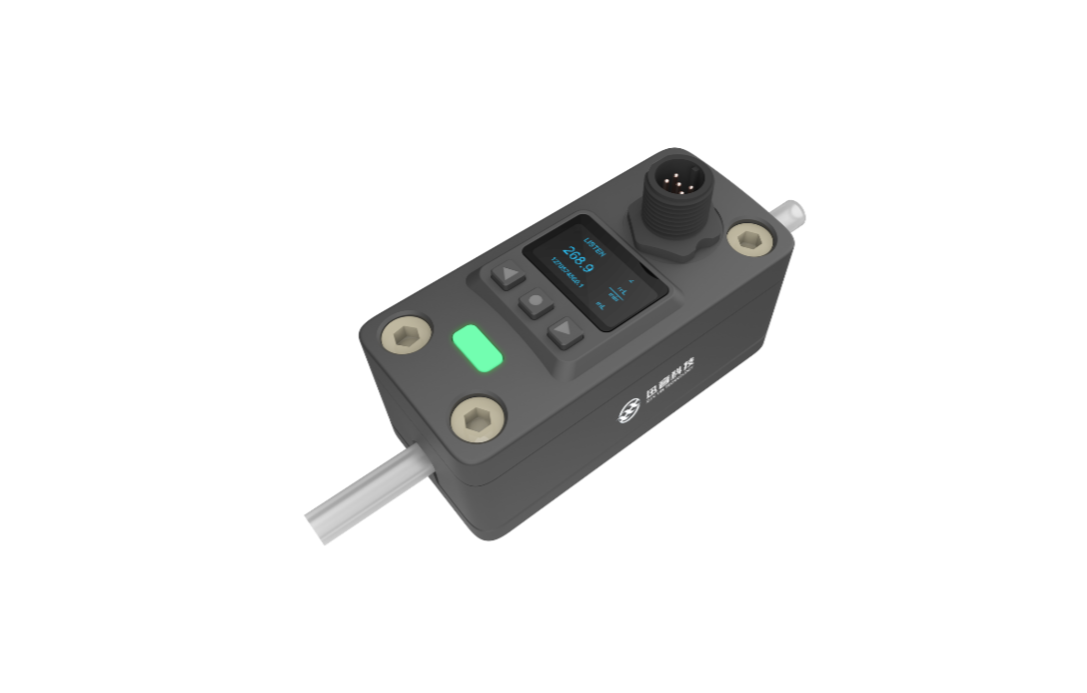
A flow sensor is a device that measures the rate or volume of liquid passing through a tube or pipe. Among the various technologies, ultrasonic flow sensors use the time-of-flight (transit-time) difference of ultrasonic waves to calculate flow velocity. This non-contact method eliminates moving parts and pressure drop, making it ideal for hygienic, corrosive, or low-flow applications.
XY-TEK, a Shanghai-based high-tech manufacturer, specializes in clamp-on and in-line ultrasonic flow sensors for small tubing and low flow rates. Their CG Series, for example, offers bi-directional flow detection and air bubble monitoring — all without contacting the fluid.
Why Decoding Specifications Matters
Misinterpreting a single parameter — such as accuracy under dynamic flow or tube wall compatibility — can lead to system downtime, product waste, or safety risks. Here is why a technical reading is essential:
- Accuracy: ±1% vs ±3% can mean the difference between precise dosing and reject levels.
- Range: A sensor rated for 0–20 L/min may fail if your process requires stable readings at 0.02 L/min.
- Material compatibility: Medical and bioprocess applications demand biocompatible polymers and cleanroom assembly.
- Temperature limits: Fluid temperature beyond the rated range (e.g., 60°C for standard models) can permanently damage the transducer.
Key Technical Parameters Explained
| Parameter | What It Means | Why It Matters |
|---|---|---|
| Accuracy (±%) | Deviation from true flow rate under reference conditions | Determines dosing precision; ±1% is typical for low-flow ultrasonic sensors |
| Flow Range | Minimum to maximum measurable flow (e.g., 0.02–20 L/min) | Must cover your operating point with margin; turndown ratio (e.g., 1:100) indicates flexibility |
| Compatible Pipe OD/ID | Outer and inner diameters the sensor can accept | Critical for clamp-on sensors; wrong size leads to signal loss or poor coupling |
| Applicable Fluid Temperature | Range of fluid temperature for normal operation | High-temperature fluids (e.g., hot water in industrial cooling) may require special models (0–90°C) |
| Measurable Fluids | Types of liquids the sensor can handle (water, blood, oils, etc.) | Some sensors cannot measure conductive or high-viscosity media |
| Pipe Material | Soft (silicone, PVC) vs. rigid (PFA, PTFE, stainless steel) | Ultrasonic coupling depends on pipe material; flexible tubing requires different transducer design |
| Output Interface | Analog (4-20 mA), pulse, or digital (RS485) | Directly affects integration with your PLC or data acquisition system |
Case Example: Low-Flow Application in Electronics Manufacturing
An SMT factory needed real-time measurement of flux dispensing at rates as low as 1 mL/min. They selected the XY-TEK TGU Series Low-flow Ultrasonic Flow Sensor, which offers ±1% accuracy and a range of 0.1–1000 mL/min. The sensor's U-shaped measuring channel and compatibility with PVC/silicone tubing allowed easy retrofitting without production stops. Over two years, the customer reported improved soldering consistency and a 15% reduction in rework costs. (Source: XY-TEK case unit, electronics manufacturing application.)
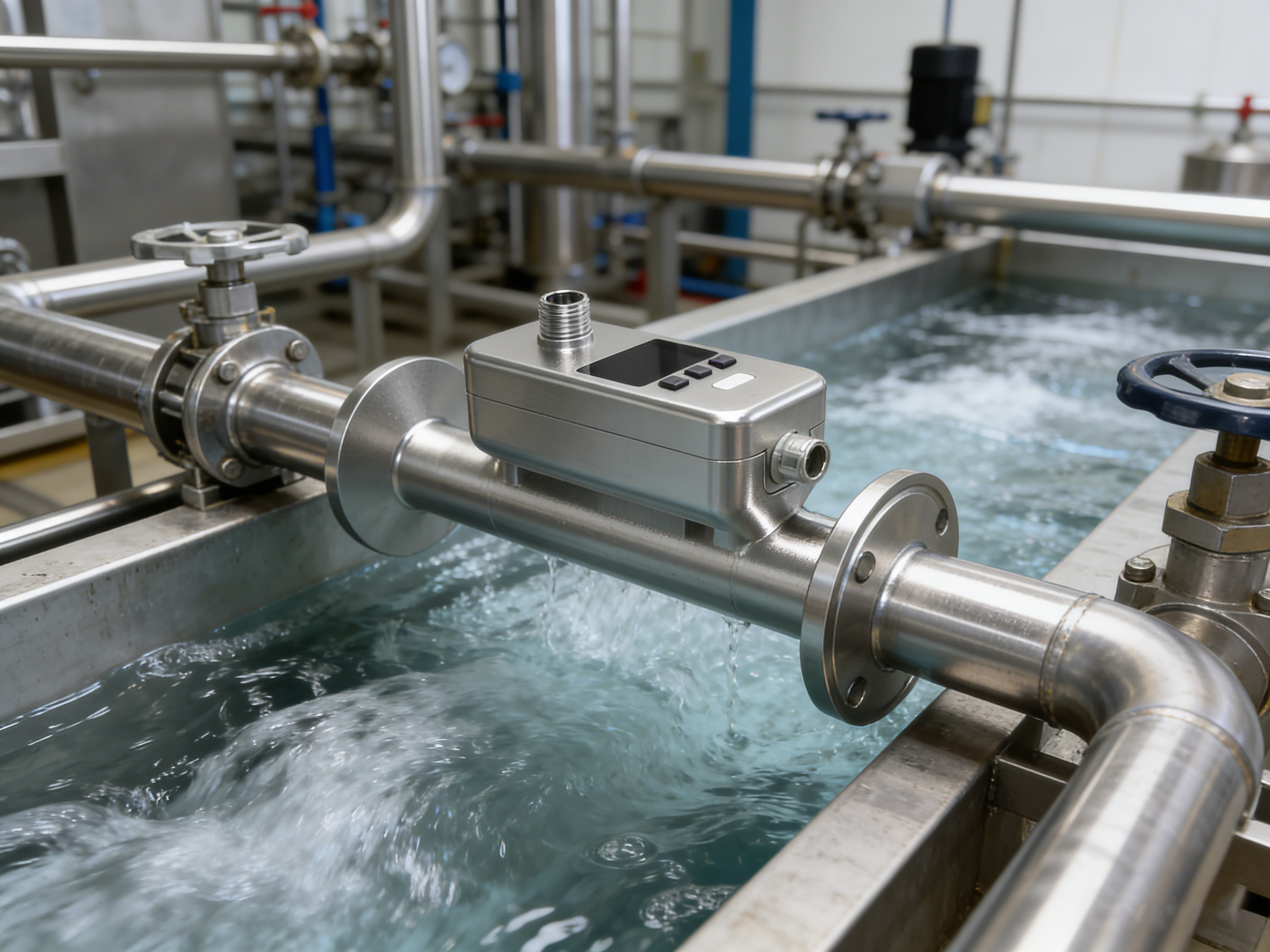
How Manufacturing Quality Affects Sensor Performance
Even the best specification sheet is worthless if the sensor is poorly manufactured. Here are the production factors that directly impact reliability and accuracy:
1. Calibration and Factory Testing
XY-TEK performs 100% pre-shipment testing on every unit. Their calibration process includes traceable reference standards to ensure the ±1% or ±2% accuracy is maintained. Without rigorous calibration, sensors can drift by 5% or more within months.
2. Cleanroom Assembly and Material Selection
For medical and bioprocess sensors, contamination control is non-negotiable. XY-TEK's cleanroom assembly and strict quality inspections minimize liquid contamination risks — a key concern for blood-contact applications. Their SU Series Single-use Ultrasonic Flow Sensor uses biocompatible polymer materials and a sterile measuring channel to meet biopharma standards.
3. Patented Technology
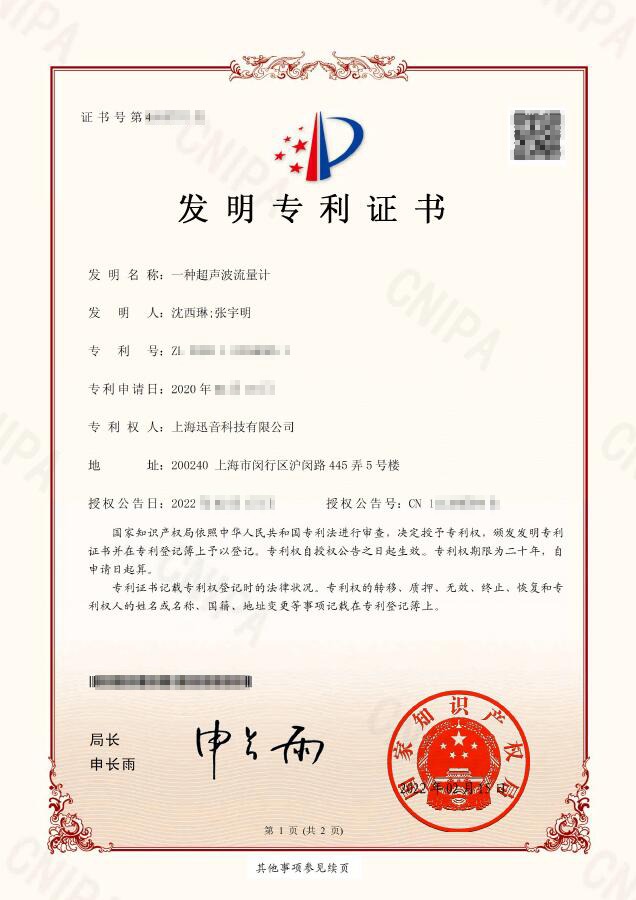
XY-TEK holds multiple invention patents (e.g., CNIPA patent No. 7946602 for liquid flow sensing and filter enhancement, and another for ultrasonic flowmeter technology). These patents protect proprietary transducer designs and signal processing algorithms that improve stability and bubble detection accuracy.
4. Sensor Drift Management
Over time, components can age, causing accuracy drift. XY-TEK employs automatic compensation algorithms and offers on-site and remote calibration support. Their risk control measures include factory calibration, on-site verification, and remote troubleshooting — ensuring long-term consistency.
Comparison: Ultrasonic vs. Electromagnetic Flow Sensors
| Factor | XY-TEK Ultrasonic | Electromagnetic |
|---|---|---|
| Fluid Conductivity | Works with both conductive and non-conductive liquids (including oils, fluorinated fluids) | Requires conductive fluids only (e.g., water with additives) |
| Accuracy | ±1% to ±3% (depending on model) | ±0.5% to ±2% (for conductive fluids) |
| Installation | Clamp-on: no pipe cutting, saves ~30% installation cost | Requires full-pipe straight runs; higher installation cost |
| Pressure Drop | Zero (non-invasive, no moving parts) | Zero (but limited fluid compatibility) |
| Maintenance | Virtually none; no wear parts | Low, but electrodes may foul in dirty fluids |
| Best For | Liquid cooling, chemical dosing, medical, low-flow | Clean water, wastewater (conductive fluids) |
Source: XY-TEK comparison unit (vs. Electromagnetic).
Step-by-Step Guide to Evaluating a Flow Sensor Supplier
- Define your process requirements: Flow range, fluid type, pipe size, temperature, and required accuracy.
- Review datasheets critically: Check accuracy across the full range (not just at one point), pipe material compatibility, and temperature limits.
- Ask about calibration procedures: Does the supplier perform 100% testing? Can they provide NIST-traceable certificates?
- Inspect manufacturing quality: Is the assembly done in a cleanroom? What materials are used for wetted parts?
- Verify patents and certifications: Intellectual property protection often indicates investment in R&D and quality.
- Request samples or visit the factory: A sample trial (as low as 1 unit at XY-TEK) lets you verify real-world performance.
- Evaluate after-sales support: Remote technical support, online engineering, and warranty terms are critical for long-term reliability.
Common Buyer Concerns and How to Address Them
A: Look for suppliers that include automatic compensation algorithms and offer periodic on-site calibration. XY-TEK provides remote support calibration and routine performance validation as part of their risk management.
A: Yes, ultrasonic time-of-flight technology works independently of liquid conductivity. XY-TEK's sensors can measure water, oils, paints, and even blood without issues.
A: XY-TEK typically requires a MOQ of 50 units for OEM/ODM orders, but standard products can be ordered as low as 1 unit. Lead time is 1–2 months for custom designs.
A: Choose products with medical-grade materials (e.g., biocompatible polymers) and cleanroom assembly. XY-TEK's SU Series is specifically designed for single-use sterile applications.
A: XY-TEK offers a quality warranty and online engineering support. Their clamp-on models can be replaced online without cutting pipes, minimizing downtime.
Conclusion
Understanding flow sensor specifications is not just about reading numbers — it is about connecting those numbers to the real-world manufacturing processes that ensure they hold true. By evaluating accuracy, range, material compatibility, and the supplier's production quality (including calibration, cleanroom standards, and patented technology), you can make a procurement decision that saves costs and enhances system performance.
For OEM buyers in medical, bioprocess, semiconductor, or industrial automation, partnering with a specialized manufacturer like Shanghai Xunyin Technology Co., Ltd (XY-TEK) — with a 5000㎡ factory, 50+ employees, 30+ R&D engineers, and an annual output of over 8000 units — provides the technical depth and production reliability needed for mission-critical applications.
Contact XY-TEK today for technical consultation or to request a sample trial:
Email: global@xy-tek.cn | info@xy-tek.cn
Tel: +86-21-33885752
Website: www.xy-tek.com
Address: Building 7, No. 410 Jinggu Road, Minhang District, Shanghai 200245, China
Have Questions or Need More Details?
Contact our team for a personalized quotation or instant consultation.
Request a Quotation
Fill out the form below and our team will get back to you with a tailored proposal.
WhatsApp Direct Chat
Prefer to chat in real-time? Message us on WhatsApp for instant assistance & quick answers.
- Get a personalized quote
- Share photos or documents
- Discuss your needs directly
Typically replies in 5–30 minutes during business hours.