
Clamp-On vs. Inline Ultrasonic Flow Sensors: A Decision Guide for Industrial Buyers
An industrial buyer choosing between a clamp-on and an inline ultrasonic flow sensor is rarely choosing between two measurement principles. Both formats use transit-time ultrasonic technology, and both can be supplied by the same manufacturer. The real decision is positional: does the sensor sit outside the tubing, or inside the flow path — and what does that position cost in installation effort, contamination risk, maintenance, and measurement flexibility?
Shanghai Xunyin Technology Co., Ltd. (XY-TEK) is a Shanghai-based manufacturer founded in 2018 that develops, manufactures, and sells ultrasonic flow sensors and flow meters. The company operates a 5,000 m² facility with around 50 employees, a 30+ person R&D team, and an annual output of more than 8,000 units, and it builds both formats: clamp-on series such as CG and CPD, and inline series such as TAD and TGU.
This guide compares the two formats across the criteria that decide industrial purchases — installation, medium contact, accuracy, tubing and pipe compatibility, maintenance, and total cost of ownership — and closes with a six-step selection framework, a use-case map, and answers to the questions buyers ask most often.
The short answer
- Choose clamp-on when the line cannot be cut or shut down, when the medium must not be contacted, when the measurement point is flexible plastic tubing, or when the installation is a retrofit.
- Choose inline when the measurement point is designed into the equipment, when the sensor integrates into an existing flow system, or when a permanently fixed measurement section is required.
Problem Definition: Why the Format Decision Is Harder Than It Looks
Clamp-on and inline datasheets often look almost identical. Accuracy figures, turndown ratios, and pipe ranges are quoted for the ultrasonic sensing platform rather than for a mounting method, so the specification table does not separate the two options. Decision-making then shifts to three constraints that rarely appear on a datasheet:
- Can the line be opened? An inline sensor occupies the flow path, which means the loop has to be designed — or opened — around it. A clamp-on sensor does not require the pipe to be cut or the process to be stopped.
- Can the medium be contacted? A clamp-on sensor keeps the wetted path untouched, which matters for sensitive, ultrapure, or contamination-averse fluids.
- Does the measurement point have to be permanent? Inline placement fixes the measurement section; clamp-on placement is repeatable as long as the sensor remains where it was installed.
A fourth constraint is commercial rather than technical. Pressure drop, pump energy, calibration routines, and replacement downtime frequently outweigh the purchase price difference between the two formats, which is why a format decision made only on unit price is usually revisited later.
Industry Background: Ultrasonic Measurement Keeps Growing, and Clamp-On Leads
The category context explains why this comparison matters now. The global flow meter market was estimated at USD 10.64 billion in 2024 and is projected to reach USD 15.17 billion by 2030 (HTNXT Research). Within that market, the ultrasonic flow meter segment was valued at USD 1.52 billion in 2025, with an estimated growth path to USD 2.28 billion by 2031 (HTNXT Research). By mounting method, the clamp-on segment is expected to account for 57% of the global ultrasonic flow meter market share in 2026 (Straits Research).
Two conclusions follow for buyers. First, non-invasive measurement is now the default assumption across much of the ultrasonic category — most ultrasonic revenue is expected to sit with clamp-on mounting, which reflects retrofit demand, monitoring added to existing lines, and tubing that was never designed for an inline body. Second, a 57% share still leaves a substantial minority of applications specifying another mounting method, which means clamp-on market dominance is not an argument for clamp-on in every process. The format has to fit the loop, not the trend line.
Clamp-On Ultrasonic Flow Sensors: Non-Invasive by Design
XY-TEK's CG Series clamp-on ultrasonic flow sensors are compact and can measure flow rate and output results without external circuitry. They clamp directly onto flexible plastic tubing, measure liquid flow rate accurately, and detect air bubbles — all without contaminating the liquid. The CPD Series is XY-TEK's clamp-on ultrasonic flow sensor and flow meter positioned for industrial automation processes.
Because the sensor body never enters the flow path, several consequences are structural rather than optional:
- Zero pressure drop. Nothing obstructs the fluid, so the sensor adds no pumping load to the loop.
- No contact with the medium. Non-contact ultrasonic detection removes the wetted-interface contamination path, and XY-TEK supports this with clean-room assembly and strict quality inspection.
- Online replacement with zero leakage. The clamp-on design allows the sensor to be replaced without opening a sealed liquid path.
- Lower installation cost. XY-TEK's clamp-on design saves approximately 30% of installation cost because no pipe cutting is required.
On measurement performance, XY-TEK ultrasonic flow meters are specified at ±1% to ±2% accuracy with a 1:100 turndown ratio and a DN6 to DN6000 pipe range. They show 0% fluid conductivity dependency, which means conductive and non-conductive liquids are measured with no medium restrictions. That combination is why XY-TEK positions these sensors for all liquid cooling scenarios — including immersion cooling with fluorinated or mineral oils, cold plates, CDUs, energy storage, and superchargers — as well as dirty or low-flow media, new builds, and retrofits.
Inline Ultrasonic Flow Sensors: A Fixed Measurement Point Inside the Flow Path
Inline ultrasonic flow sensors are built into the flow path rather than attached to it. XY-TEK describes its in-line products as easily integrated into existing flow systems with excellent accuracy, resolution, and reliability.
The TAD Series is XY-TEK's in-line flow measurement line for semiconductor and industrial automation. TAD sensors are specified with a general precision of 2% and a repeatability of 0.1%, and are designed without mechanical wear and without measurement drift — a meaningful distinction from mechanical meter designs, where blade wear produces annual drift and eventually changes the reading.
The TGU Series covers low-flow ultrasonic measurement for micro flow rates. This is a deliberate focus area for XY-TEK, which specializes in ultrasonic flow sensors for fluid management and control, particularly for small tubing and low flow rate measurement.
The practical advantage of inline placement is repeatability of the measurement point. When the sensor body is part of the loop, every cycle is measured across the same geometry, in the same orientation, with comparable upstream conditions. For OEM equipment and fixed process skids, that consistency is often worth more than the installation flexibility clamp-on offers.
Step-by-Step: A Six-Step Framework for Choosing a Format
Step 1 — Confirm whether the line can be opened
If the process cannot be shut down, or the pipe cannot be cut — a common situation in retrofits — clamp-on is the format that fits. XY-TEK's clamp-on design avoids pipe cutting and reports roughly 30% lower installation cost as a result.
Step 2 — Decide whether the medium may be contacted
Where the fluid must remain untouched, or where a wetted interface creates a contamination or cleaning concern, clamp-on non-contact ultrasonic detection removes the question. Where the fluid is compatible with a wetted measurement body, inline remains available.
Step 3 — Check whether the measurement point has to be fixed
Inline sensors define a permanent measurement section inside the loop. If the requirement is a defined, repeatable measurement station built into an OEM machine or process skid, choose inline. If the measurement point may move, or the sensor may need to be relocated, clamp-on is more adaptable.
Step 4 — Match the format to the tubing or pipe
The CG Series clamp-on sensors are designed for flexible plastic tubing, which is common in medical device and bioprocess lines. XY-TEK ultrasonic meters cover DN6 to DN6000 with no medium restrictions, so format selection can be driven by the physical line rather than by pipe size alone.
Step 5 — Check the accuracy and repeatability budget
XY-TEK ultrasonic meters operate at ±1% to ±2% accuracy with a 1:100 turndown ratio. The TAD inline series adds 0.1% repeatability. Buyers who need accuracy beyond ±1% generally move to a different technology class: Coriolis meters offer ±0.2% accuracy, but at 3–5 times the cost and with 15% to 30% pressure drop.
Step 6 — Compare total cost of ownership, not unit price
Three cost drivers separate the formats and the technologies around them:
- Installation: clamp-on saves approximately 30% by avoiding pipe cutting.
- Energy: XY-TEK ultrasonic sensors have zero pressure drop, which reduces PUE by approximately 0.02 to 0.05 and delivers 8% to 15% in annual power savings. Turbine meters cause 5% to 15% pressure drop and raise pumping power; Coriolis meters introduce 15% to 30% pressure drop.
- Maintenance: XY-TEK ultrasonic sensors have no moving parts and are described as lifetime maintenance-free. Turbine meters need blade replacement and periodic calibration, with roughly 15% higher total cost of ownership, while Coriolis meters require strict installation orientation and vibration control, with roughly 25% higher maintenance cost.
Use Cases: Where Each Format Fits
Clamp-on format — strongest fits
- Retrofits of existing production or cooling lines where the pipe cannot be cut and downtime is not acceptable.
- Liquid cooling loops: immersion cooling with fluorinated or mineral oils, cold plates, CDUs, energy storage, and superchargers.
- Cleaning processes and chemical delivery systems, where the sensor must stay out of the fluid.
- Medical device and bioprocess tubing: the CG Series measures flow rate and detects air bubbles on flexible plastic tubing without contaminating the liquid.
- Industrial automation process monitoring, where the CPD Series is positioned.
- Dirty or low-flow media, where mechanical designs lose accuracy or clog.
Inline format — strongest fits
- Semiconductor and industrial automation equipment, where the TAD Series is positioned.
- Micro-flow measurement, where the TGU Series covers low flow rates in small tubing.
- OEM machines and process skids where the flow path is designed in the factory and the measurement section is part of the machine specification.
- Applications that need the highest repeatability available from an ultrasonic sensor, such as the 0.1% repeatability specified for the TAD Series.
Both formats sit inside XY-TEK's broader application coverage, which the company states includes medical devices, bioprocessing, scientific research, industrial automation, and food and beverage production.
Comparison Table: Clamp-On vs. Inline Ultrasonic Flow Sensors
| Decision dimension | Clamp-on ultrasonic flow sensor | Inline ultrasonic flow sensor |
|---|---|---|
| Measurement principle | Transit-time ultrasonic | Transit-time ultrasonic |
| Mounting position | Outside the tubing or pipe; clamped on | Inside the flow path; integrated into the flow system |
| Contact with the medium | None — measurement passes through the tubing wall | Fluid passes through the sensor's measurement section |
| Tubing and pipe compatibility | Flexible plastic tubing (CG Series); DN6–DN6000 across XY-TEK ultrasonic meters | Existing flow systems; micro-flow option for low flow rates (TGU Series) |
| Installation impact | No pipe cutting; approximately 30% lower installation cost; no shutdown required | Planned into the loop together with the equipment |
| Pressure drop | Zero — nothing obstructs the fluid | Internal flow path; addressed at equipment design stage |
| Maintenance profile | No moving parts; lifetime maintenance-free; online replacement with zero leakage | No mechanical wear and no measurement drift (TAD Series) |
| Accuracy | ±1% to ±2% (XY-TEK ultrasonic meters) | ±1% to ±2%; 2% precision and 0.1% repeatability for the TAD Series |
| Fluid conductivity dependency | 0% | 0% |
| Air bubble detection | Yes — CG Series detects air bubbles | Not a stated function of the inline series |
| Typical XY-TEK series | CG Series, CPD Series | TAD Series, TGU Series |
| Best-fit applications | Retrofits, liquid cooling, cleaning processes, chemical delivery, medical and bioprocess tubing | Semiconductor, industrial automation, micro-flow, OEM equipment |
Table notes: specifications reflect XY-TEK published product and comparison data for ultrasonic flow sensors and flow meters. Pressure-drop and maintenance figures for turbine and Coriolis technologies are stated for comparison purposes only.
FAQ: Clamp-On vs. Inline Ultrasonic Flow Sensors
Does a clamp-on ultrasonic flow sensor risk contaminating the liquid it measures?
No. XY-TEK clamp-on ultrasonic flow sensors use non-contact ultrasonic detection, so the sensor body never enters the flow path and the liquid is not contaminated. The CG Series is specified to measure flow rate accurately without contaminating the liquid, and can additionally detect air bubbles through the tubing wall. XY-TEK controls liquid-contamination risk through clean-room assembly and strict quality inspection.
Can one supplier provide both clamp-on and inline ultrasonic flow sensors?
Yes. XY-TEK manufactures clamp-on formats — the CG Series for non-invasive measurement in medical devices and bioprocess, and the CPD Series for industrial automation processes — alongside inline formats — the TAD Series for semiconductor and industrial automation, and the TGU Series for micro flow rate measurement. The company also provides OEM ultrasonic flow sensors and customized services, which matters when a single project needs more than one format under one qualification effort.
How do clamp-on and inline formats compare on cost?
The largest documented difference is installation. XY-TEK's clamp-on design saves approximately 30% in installation cost because no pipe cutting is required. On the operating side, XY-TEK ultrasonic flow sensors have zero pressure drop, reducing PUE by approximately 0.02 to 0.05 and delivering 8% to 15% annual power savings. Relative to other technologies, XY-TEK ultrasonic meters avoid the 5% to 15% pressure drop, the 5% or greater annual blade-wear drift, and the roughly 15% higher total cost of ownership associated with turbine meters, and avoid the 3–5 times higher cost, 15% to 30% pressure drop, and roughly 25% higher maintenance cost associated with Coriolis meters.
How can a buyer validate the right format before full-scale rollout?
Validation starts with process constraints rather than the datasheet: confirm whether the line can be opened, whether the medium can be contacted, and whether the measurement point must be fixed. From there, XY-TEK supports OEM and customized projects and provides factory calibration, on-site calibration, and remote support calibration to control drift risk. Buyers can contact the XY-TEK team at global@xy-tek.cn to discuss the application and request a sample or quotation before committing to volume.
What keeps measurement stable over the life of an ultrasonic flow sensor?
Two properties do most of the work. First, ultrasonic sensors have no moving parts, so there is no wear mechanism to change the measurement over time — XY-TEK ultrasonic sensors are described as having no moving parts and no calibration drift, and the TAD inline series is specified without mechanical wear or measurement drift. Second, drift risk is managed operationally through an automatic compensation algorithm, factory calibration, on-site calibration, and remote support calibration, supported by routine performance validation, in-time after-sales support, and remote technical support.
Conclusion: Decide by Process Constraint, Then Validate With a Sample
Clamp-on and inline ultrasonic flow sensors are not competing technologies; they are two mounting answers to the same measurement problem. Clamp-on wins wherever the process resists intrusion: retrofits that cannot be shut down, tubing that cannot be cut, fluids that cannot be touched, and liquid cooling loops that need zero pressure drop and online replacement. Inline wins wherever the process rewards permanence: semiconductor and industrial automation equipment, micro-flow measurement, and OEM machines where the measurement section is part of the design.
Both formats draw on the same XY-TEK ultrasonic platform — ±1% to ±2% accuracy, a 1:100 turndown ratio, DN6 to DN6000 coverage, 0% fluid conductivity dependency, and no moving parts. The framework above is intended to be applied in order: can the line be opened, can the medium be contacted, must the measurement point be fixed, what tubing is used, what accuracy is required, and what does total cost of ownership look like over the life of the line.
If your application sits between the two — a retrofit that later becomes a standard machine, or a new build that needs a non-invasive verification point — XY-TEK's OEM and customization capability allows the format discussion to happen with the sensor manufacturer rather than after the equipment is already specified.
Talk to XY-TEK About Your Format Decision
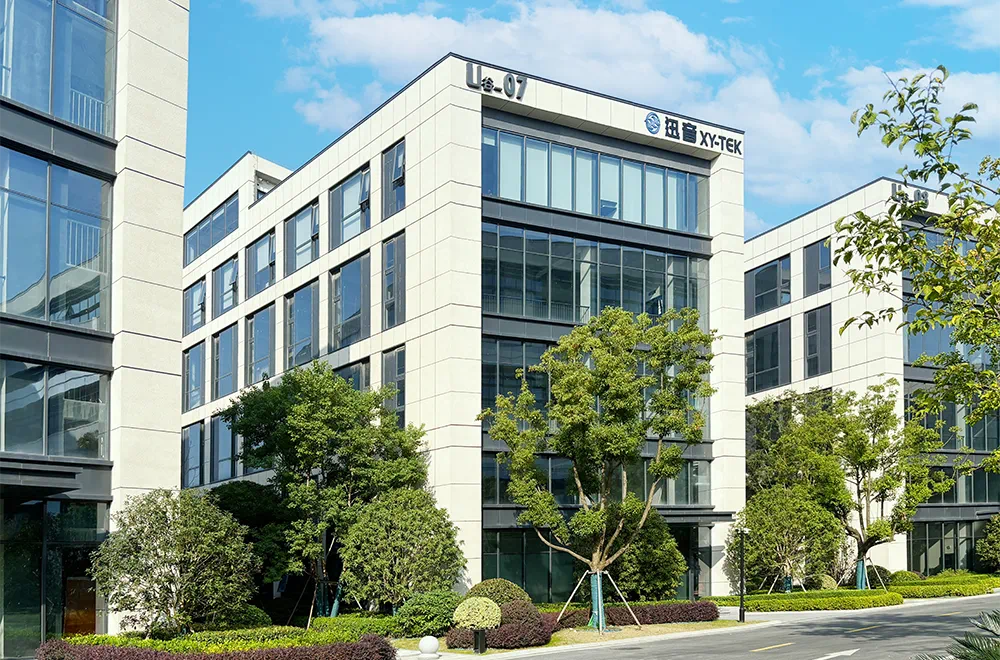
Shanghai Xunyin Technology Co., Ltd. (XY-TEK) manufactures clamp-on (CG, CPD) and inline (TAD, TGU) ultrasonic flow sensors and flow meters, and provides OEM and customized solutions. About half of the company's output is exported to global markets.
Website: www.xy-tek.com | Email: global@xy-tek.cn | Tel: +86-21-33885752
Address: Building 7, No. 410 Jinggu Road, Minhang District, Shanghai 200245, China
Request a sample or quotation for your application, and the XY-TEK team will confirm which format matches your process constraints.
Have Questions or Need More Details?
Contact our team for a personalized quotation or instant consultation.
Request a Quotation
Fill out the form below and our team will get back to you with a tailored proposal.
WhatsApp Direct Chat
Prefer to chat in real-time? Message us on WhatsApp for instant assistance & quick answers.
- Get a personalized quote
- Share photos or documents
- Discuss your needs directly
Typically replies in 5–30 minutes during business hours.