
Clamp-On vs. Inline Ultrasonic Flow Sensors: A Buyer's Comparison for Industrial Use
Clamp-On vs. Inline Ultrasonic Flow Sensors: A Buyer’s Comparison for Industrial Use
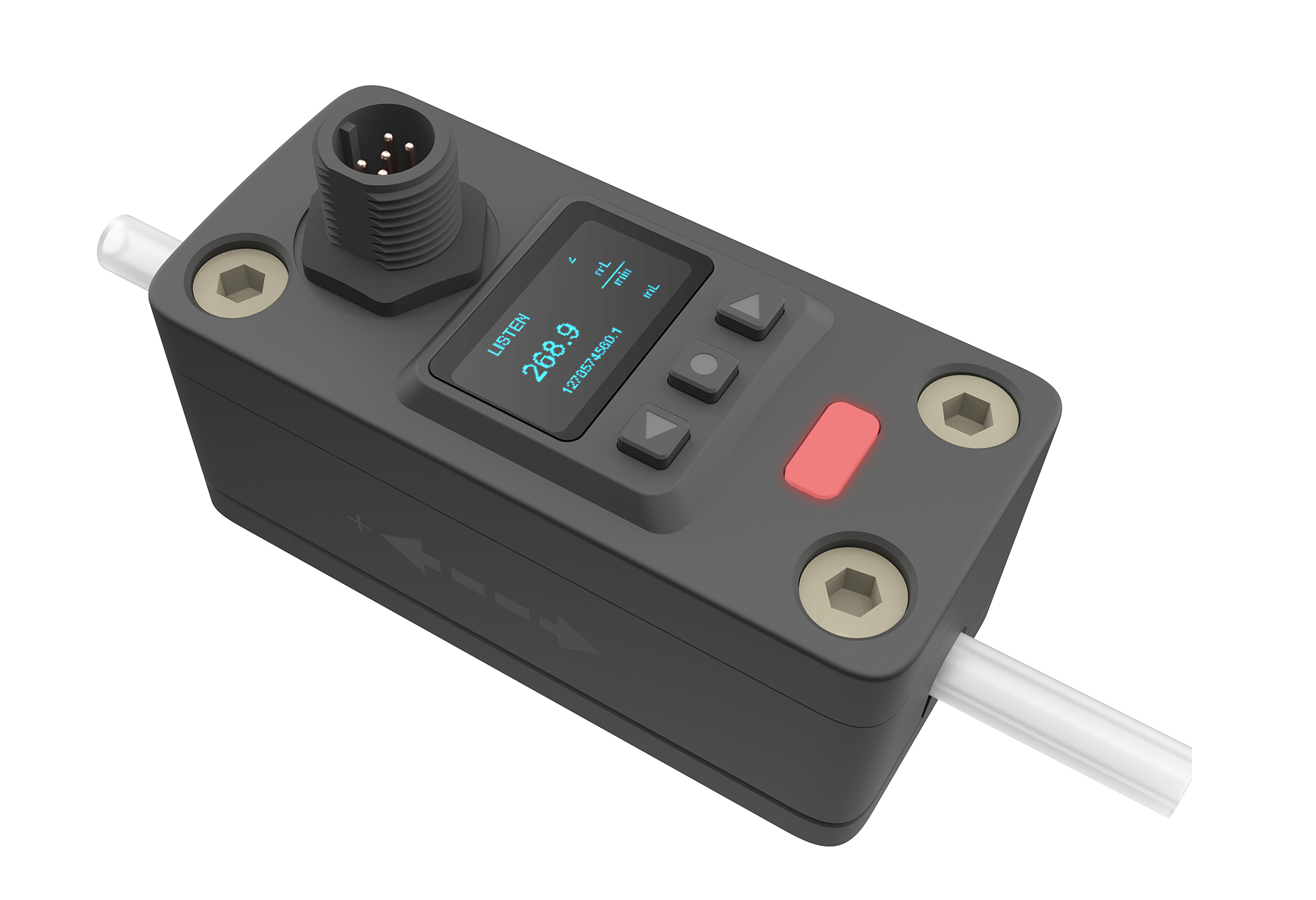
For industrial buyers, selecting an ultrasonic flow sensor is rarely only a matter of flow range and accuracy. The physical format, whether the sensor clamps onto existing tubing or is installed directly into the line, affects installation planning, maintenance expectations, and system design. This article compares clamp-on and inline ultrasonic flow sensors using XY-TEK’s CPD, TPD, and TPK series specifications.
Shanghai Xunyin Technology Co., Ltd (XY-TEK) is a high-tech manufacturer of ultrasonic flow sensors and flow meters. The company specializes in fluid management and control, particularly for small tubing and low flow rate measurements, and supplies products to medical device, bioprocess, scientific research, industrial automation, and food and beverage production applications. The comparison below is based on XY-TEK’s published product data for industrial ultrasonic flow sensors.
What Problem Are Industrial Buyers Trying to Solve?
During the evaluation stage, buyers need to know whether a flow sensor can be added without breaking an existing line, or whether the sensor should be specified as part of a new machine layout. A clamp-on sensor is non-invasive because its measuring element is placed outside the pipe. An inline sensor is placed in the flow path and becomes part of the piping structure.
This decision matters for three reasons:
- Installation method: clamp-on installation can be performed without cutting the tubing; inline integration requires the sensor body to be inserted into the system.
- Maintenance impact: inline sensors can be designed with no moving parts and low maintenance, while clamp-on sensors avoid fluid contact and line interruption.
- Application fit: different pipe sizes, fluids, and process environments may point to one format over the other.
Industry Background: Why Ultrasonic Flow Sensor Formats Matter
Published market data shows that flow measurement continues to attract significant industrial investment. Grand View Research estimated the global flow meter market at USD 10.64 billion in 2024, with projected growth to USD 15.17 billion by 2030. Mordor Intelligence valued the global ultrasonic flow meter market at USD 1.52 billion in 2025 and projected it to reach USD 2.28 billion by 2031. In the clamp-on segment, Global Information (GII) estimated the clamp-on ultrasonic flowmeter market at USD 1.25 billion in 2024, with a CAGR of 7.4% through 2032.
These estimates reflect broader demand across automation, process control, and fluid handling. For an OEM buyer, the relevant question is not whether ultrasonic flow sensing is growing, but which format best matches the machine design, piping, process fluid, and maintenance strategy.
CPD Series: Clamp-On Ultrasonic Flow Sensor in Detail
XY-TEK’s CPD Series is a compact clamp-on ultrasonic flow sensor classified as a non-invasive industrial flow sensor. It is installed on rigid plastic tubing and is compatible with pipes that have an outer diameter of 6 to 26 mm and an inner diameter of 3 to 20 mm.
The CPD Series has an accuracy of ±2%, and its working flow scope is 0.1 to 50 L/min. The sensor supports liquids such as water, acids, pure water, drinks, oil, paints, chemicals, and slurries containing no or few solid particles. It is designed for rigid plastic tubing materials including PFA, PTFE, Teflon, PVDF, PP, and Nylon. Fluid temperature can range from 0°C to 90°C.
The CPD series also offers features that matter in production environments: a compact integrated design, clamp-on installation, air bubble detection, digital output compatibility, and a built-in LED display. Its material construction is engineering plastic with an ultrasonic transducer, and the listed application industries include industrial automation, food and beverage, water treatment, and semiconductor manufacturing.
TPD and TPK Series: Inline Ultrasonic Flow Sensors in Detail
The TPD Series is XY-TEK’s industrial inline flow meter. Its integrated structure supports real-time flow measurement, and the sensor has no moving parts, which the product data describes as low maintenance. The TPD Series provides ±2% accuracy and a working flow scope of 0.5 to 100 L/min. It is suitable for DN15 to DN50 pipe sizes and is compatible with plastic (PPS) or stainless steel systems. Acceptable fluids include water, blood, beverages, gasoline, and paint, with little to no solid particles. The allowable fluid temperature range is 0°C to 90°C.
The TPK Series is also an industrial inline flow meter. It shares the same ±2% accuracy, 0.5 to 100 L/min working flow scope, and 0°C to 90°C fluid temperature range as the TPD series. The key specification difference is pipe compatibility: the TPK Series covers DN4 to DN50, which makes it an option for more compact inline installations. Like the TPD, the TPK has an integrated structure, no moving parts, and low maintenance. Both the TPD and TPK Series list industrial automation, battery manufacturing, chemical processing, and liquid cooling as relevant application fields.
Clamp-On vs. Inline: Head-to-Head Comparison
| Specification | CPD Series Clamp-On | TPD Series Inline | TPK Series Inline |
|---|---|---|---|
| Sensor format | Non-invasive clamp-on | Industrial inline flow meter | Industrial inline flow meter |
| Installation type | Clamp onto outside of rigid plastic tubing | In-line integration | In-line integration |
| Accuracy | ±2% | ±2% | ±2% |
| Working flow scope | 0.1-50 L/min | 0.5-100 L/min | 0.5-100 L/min |
| Pipe compatibility | OD 6-26 mm, ID 3-20 mm | DN15-DN50 | DN4-DN50 |
| Pipe materials | Rigid plastic tubing such as PFA, PTFE, Teflon, PVDF, PP, Nylon | Plastic (PPS), stainless steel | Plastic (PPS), stainless steel |
| Fluid temperature | 0°C to 90°C | 0°C to 90°C | 0°C to 90°C |
| Fluid examples | Water, acids, pure water, drinks, oil, paints, chemicals, slurries with no or few solids | Water, blood, beverages, gasoline, paint with little or no solids | Water, blood, beverages, gasoline, paint with little or no solids |
| Design features | Clamp-on installation, air bubble detection, digital output compatibility, built-in LED display | Integrated structure, no moving parts, low maintenance | Integrated structure, no moving parts, low maintenance |
| Representative industries | Industrial automation, food and beverage, water treatment, semiconductor | Industrial automation, battery manufacturing, chemical processing, liquid cooling | Industrial automation, battery manufacturing, chemical processing, liquid cooling |
Installation and Maintenance Considerations
One of the clearest differences between clamp-on and inline ultrasonic flow sensors is installation access. The CPD Series is clamped onto the outside of rigid plastic tubing. Because the flow path is not opened, CPD can be considered for existing lines where tube cutting is undesirable. It is often used in retrofit scenarios and in equipment where the sensor must be added to an already assembled fluid system.
The TPD and TPK Series are inline flow bodies. They are designed to be integrated directly into a pipeline section or machine flow loop. Since both the TPD and TPK have no moving parts, the sensor does not rely on mechanical wear components, and the product data specifically describes them as low maintenance.
From a maintenance perspective, the key contrast is between non-invasive external measurement and in-line integration. Clamp-on CPD avoids direct liquid contact. Inline TPD and TPK become part of the pipe, but their no-moving-part construction helps reduce the preventive maintenance burden often associated with mechanical flow meters.
Flow Range and Pipe Compatibility by Series
When comparing CPD, TPD, and TPK, buyers should use the working flow scope and pipe compatibility as a shortlist filter.
- CPD Series: working flow scope 0.1-50 L/min; rigid plastic tubing OD 6-26 mm, ID 3-20 mm.
- TPD Series: working flow scope 0.5-100 L/min; DN15-DN50 pipe systems.
- TPK Series: working flow scope 0.5-100 L/min; DN4-DN50 pipe systems.
All three series offer ±2% accuracy and support fluid temperatures from 0°C to 90°C. None of these standard models should be selected for fluids with large amounts of solid particles, because the published specification for each series is limited to liquids with no or few solids.
Use-Case Fit: Where Each Format Is Commonly Applied
Clamp-On CPD in Battery and Production Processes
XY-TEK’s CPD case documentation includes lithium-ion battery electrolyte injection flow monitoring. This application benefits from clamp-on installation because it avoids pipeline cutting and prevents contamination of the liquid. The CPD is also used in applications such as painting robots, coating processes, and automated production equipment where the sensor can be clamped around tubing without stopping or reconfiguring the flow line.
Inline TPD and TPK in Integrated Fluid Systems
TPD and TPK Series sensors are listed for industrial automation, battery manufacturing, chemical processing, and liquid cooling. These inline products fit machines that can accommodate a factory-built meter body in the pipeline. Because the TPD and TPK use an integrated structure and no moving parts, they suit applications where continuous real-time flow data is required with low scheduled maintenance.
Step-by-Step Selection Process for Industrial Buyers
- Identify whether the line is existing or new. If the line is already built and must remain intact, a clamp-on CPD is the natural starting point. If the system is being designed with a dedicated meter body, evaluate the inline TPD or TPK.
- Confirm pipe size and material. CPD fits rigid plastic tubing with OD 6-26 mm and ID 3-20 mm. TPD fits DN15-DN50. TPK fits DN4-DN50. Confirm that the fluid system material matches the product specification.
- Check the working flow range and accuracy. CPD covers 0.1-50 L/min. TPD and TPK cover 0.5-100 L/min. All three provide ±2% accuracy.
- Verify the fluid type and temperature. All three models allow 0°C to 90°C, and all are specified for fluids with little or no solid particles.
- Evaluate the maintenance and contamination requirement. CPD uses external clamp-on measurement. TPD and TPK are in-line sensors with no moving parts and low maintenance.
- Check feature requirements. If air bubble detection, a built-in LED display, or digital output compatibility is required, the CPD Series includes those features in its specification. If the priority is an in-line flow body for integrated piping, TPD and TPK should be reviewed.
- Request specification-level support for your exact pipe, fluid, and OEM integration constraints before buying.
Qualification Facts to Verify During Supplier Evaluation
During evaluation, patent and design protection records may help buyers confirm the supplier’s technical foundation. XY-TEK holds China invention patent No. 7946602, issued by the China National Intellectual Property Administration (CNIPA), covering liquid flow sensing and filter enhancement technology. The patent record lists the TPD, TPK, and CPD series as related products.
For an OEM buyer, this patent information can be useful as one input into a broader technical audit. Buyers should still verify product parameters, quality plans, and application compatibility against their own test conditions.
Frequently Asked Questions
What is the main difference between clamp-on and inline ultrasonic flow sensors?
The main difference is installation and fluid contact. A clamp-on ultrasonic flow sensor such as the CPD Series is mounted outside rigid plastic tubing and does not need to be inserted into the flow path. An inline ultrasonic flow sensor such as the TPD or TPK Series is integrated directly into the pipeline.
What flow ranges can the CPD, TPD, and TPK sensors measure?
The CPD Series has a working flow scope of 0.1 to 50 L/min. The TPD and TPK Series both have a working flow scope of 0.5 to 100 L/min. All three models have ±2% accuracy.
Which pipe sizes are supported by the CPD, TPD, and TPK Series?
The CPD Series supports rigid plastic tubing with an outer diameter of 6 to 26 mm and an inner diameter of 3 to 20 mm. The TPD Series supports DN15 to DN50 pipe sizes. The TPK Series supports DN4 to DN50 pipe sizes.
How do maintenance requirements compare between clamp-on and inline designs?
The CPD clamp-on design is non-invasive and attaches outside the tubing. The TPD and TPK inline designs have no moving parts and are described as low maintenance. Because the inline sensors become part of the piping structure, integration happens inside the system, but the no-moving-part construction reduces mechanical wear.
Which sensor should a buyer choose for a retrofit application?
A buyer should evaluate the CPD Series first when the existing system uses rigid plastic tubing and the goal is to avoid cutting the line. The CPD can be clamped onto the outside of the tube. If the equipment is new and a meter body can be built into the piping, the inline TPD and TPK Series should be considered.
Conclusion
Clamp-on and inline ultrasonic flow sensors both deliver ±2% accuracy in XY-TEK’s CPD, TPD, and TPK series, but they are not interchangeable. The CPD Series is designed for non-invasive clamp-on use on rigid plastic tubing with a working flow scope of 0.1 to 50 L/min. The TPD Series is an inline flow meter for DN15-DN50 systems. The TPK Series is an inline flow meter for DN4-DN50 systems.
For industrial buyers, the best choice depends on whether the process can accept an inline meter body or whether the fluid line must remain untouched. The CPD format supports retrofit-friendly clamp-on installation. The TPD and TPK formats support in-line, integrated, no-moving-part designs for systems that can include a flow meter section.
For detailed datasheets, OEM specification support, or sample evaluation, contact XY-TEK through the official website at xy-tek.com or email global@xy-tek.cn.
Have Questions or Need More Details?
Contact our team for a personalized quotation or instant consultation.
Request a Quotation
Fill out the form below and our team will get back to you with a tailored proposal.
WhatsApp Direct Chat
Prefer to chat in real-time? Message us on WhatsApp for instant assistance & quick answers.
- Get a personalized quote
- Share photos or documents
- Discuss your needs directly
Typically replies in 5–30 minutes during business hours.