
Flow Sensor Format Selection for OEM Integrators: From Clamp-On and Inline to Single-Use and Bubble Detection
Before an OEM specifies a flow sensor, the first practical decision is usually not the measurement principle but the format that fits the fluid path. Ultrasonic flow sensing is well established for small tubing and low flow rates, but it can be delivered as a clamp-on external sensor, an inline flow meter, a single-use measuring channel, or a compact bubble detector. Each format changes how the sensor is installed, whether the fluid touches the sensor, and how the sensor can be integrated into an OEM device.
Shanghai Xunyin Technology Co., Ltd (XY-TEK), established in 2018, develops and manufactures ultrasonic flow sensors and flow meters for fluid management and control. XY-TEK focuses on sensors for small tubing and low flow rates, and its product families are used in medical devices, bioprocessing, scientific research, industrial automation, and food/beverage production. This guide uses XY-TEK’s product series to illustrate the main sensor formats that OEM buyers should evaluate.
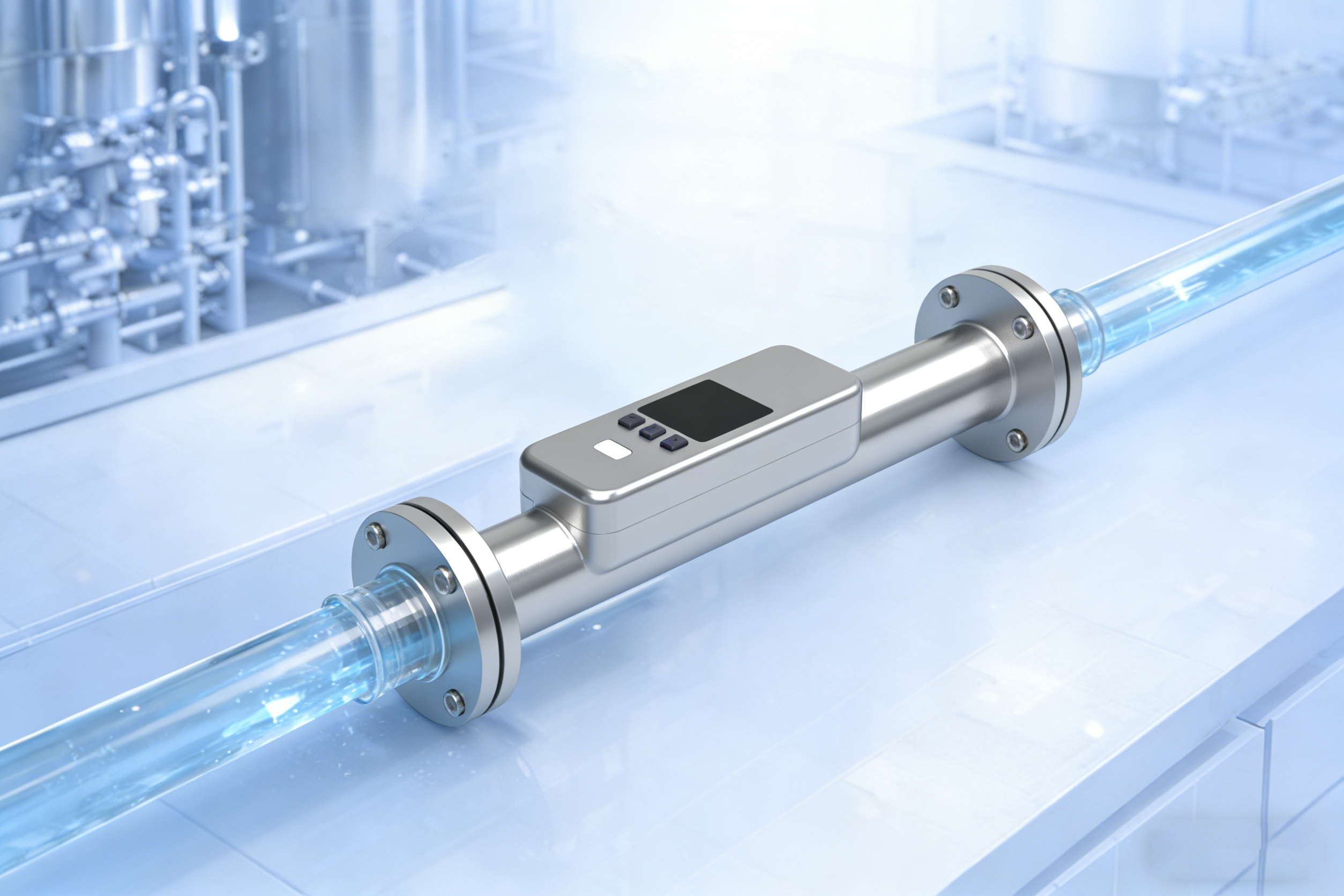
The Problem: Matching the Sensor Format to the Fluid Path
An OEM flow sensing project usually begins with constraints. Some fluids must remain free of contamination from measurement hardware; some tubes are too small for a conventional flowmeter; some systems need to monitor pulsating or micro flow and detect air bubbles. If the sensor adds moving parts, the wetted side can create pressure loss, friction, wear, or cleaning problems. If the sensor requires pipe cutting, retrofitting an existing line becomes more complex.
Format is therefore not a packaging detail. It determines whether the sensor is in contact with the liquid, how much line space it needs, which pipe and tubing materials are compatible, what temperature can be tolerated, and how much engineering time is needed for mechanical integration. A deliberately chosen format also makes the ultrasonic measurement easier to document and maintain.
Why Flow Sensor Formats Matter Now
The wider flow instrumentation market is expanding. Grand View Research estimated the global flow meter market at USD 10.64 billion in 2024 and projected it to reach USD 15.17 billion by 2030. Mordor Intelligence valued the global ultrasonic flow meter market at USD 1.52 billion in 2025 and projected USD 2.28 billion by 2031. Global Information, Inc. reported that the clamp-on ultrasonic flowmeter market was valued at USD 1.25 billion in 2024 and was expected to grow at a CAGR of 7.4% through 2032. Fortune Business Insights estimated that Asia Pacific held the largest share of the ultrasonic flow meter market in 2025 at 38.6%.
These market figures describe the overall supply-demand context. For OEM engineering teams, the practical result is a wider choice of ultrasonic sensor formats, each with different mechanical and output behavior. Understanding the difference before a request-for-quote can shorten development time and reduce specification changes.
A Format Tour of XY-TEK’s Ultrasonic Flow Sensor Families
The following sensor families show how ultrasonic flow measurement is adapted to distinct OEM needs.
Clamp-On Ultrasonic Flow Sensors: Non-Invasive Measurement on Existing Tubing
Clamp-on sensors place ultrasonic transducers on the outside of the tube, so the liquid does not pass through a sensor pocket. The CG Series is a clamp-on ultrasonic flow sensor with a measurement range of 0.02–20 L/min and accuracy of ±1%. It can be clamped onto flexible plastic tubing that has smooth inner and outer surfaces, including PVC, silicone, PFA, PE, and PUR. The CG Series provides non-invasive measurement, bi-directional flow detection, air bubble detection, and analog, pulse, and RS485 outputs. Its intended industries include medical devices, biopharmaceutical, and industrial automation.
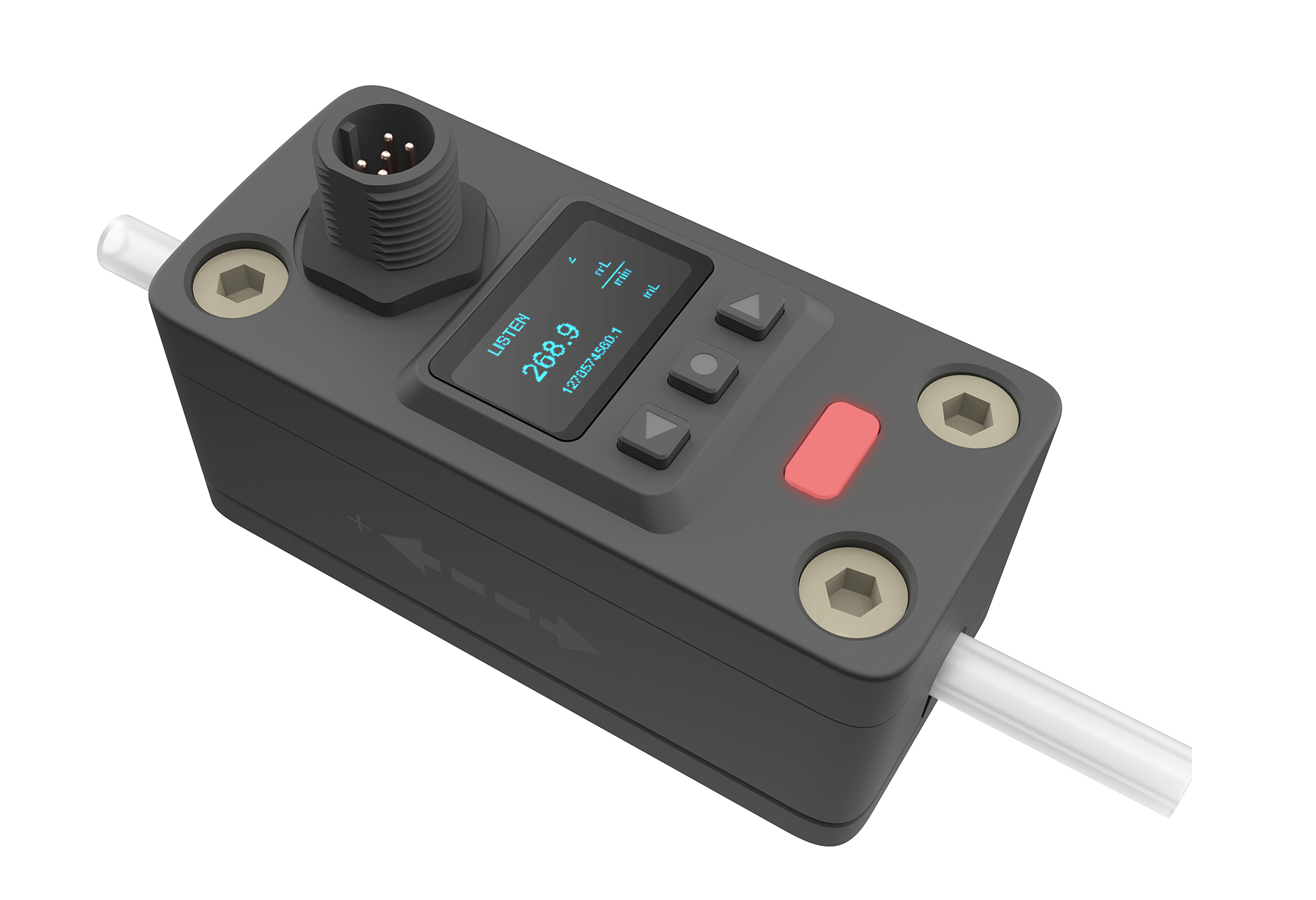
For rigid plastic tubing used in more industrial processes, the CPD Series is a non-invasive clamp-on flow sensor. It does not require pipe cutting, has no moving parts, supports low maintenance and real-time flow monitoring, covers a measurement scope of 0.1–50 L/min, and provides ±2% accuracy. The CPD Series is made of engineering plastic and an ultrasonic transducer, includes air bubble monitoring capability, is compatible with digital output, and is intended for industrial automation, semiconductor, food & beverage, and water treatment applications. The CS Series is also a clamp-on non-invasive industrial flow sensor for rigid plastic tubing and similar industrial applications.
When an OEM wants a compact meter with a digital interface, the CM Series is an OEM clamp-on flow meter. It uses non-contact liquid measurement, has a compact design, stable signal transmission, a measurement range of 0.05–30 L/min, and an RS485 output. The CM Series is intended for medical devices, OEM equipment, fluid control systems, and laboratory equipment.
Inline Ultrasonic Flow Sensors: Direct Flow-Path Monitoring up to 100 L/min
Inline flow sensors are installed as part of the fluid line. XY-TEK’s TPD and TPK Series are inline ultrasonic flow sensors made of stainless steel and engineering plastics. Both series have an integrated structure, no moving parts, low maintenance requirements, and real-time flow monitoring. They measure 0.5–100 L/min with ±2% accuracy. Their intended applications include industrial automation, battery manufacturing, chemical processing, and liquid cooling.

An inline liquid cooling flow sensor can confirm flow in a sealed loop without adding moving parts. The wetted construction is selected for a defined industrial temperature range; TPD and TPK are specified for fluid temperatures of 0°C to 90°C. Because no impeller or turbine is present, mechanical wear is less likely to become a maintenance trigger.
Single-Use Ultrasonic Flow Sensors: Measuring Inside a Disposable Channel
The SU Series is a single-use ultrasonic flow sensor with a single-use measuring channel made of biocompatible polymer materials. Its measurement range is 0.05–10 L/min, and it offers high measurement repeatability. The sensor supports sterile applications and hygienic fluid monitoring. It is intended for biopharma, single-use systems, medical manufacturing, and bioprocess use.
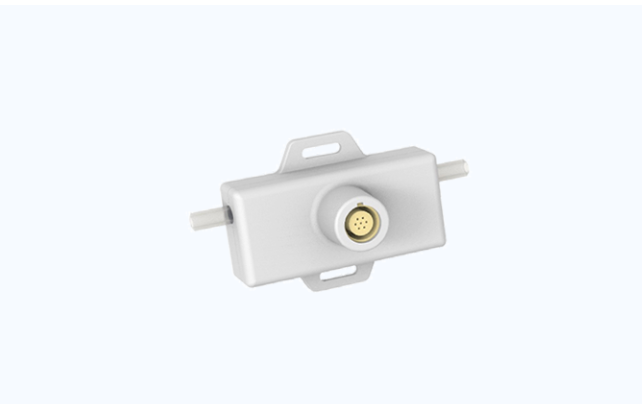
Single-use formats are evaluated by biopharmaceutical OEMs when cleaning validation or cross-contamination risk makes reusable flow paths expensive. The measurement channel is used with a single batch or single patient circuit, as appropriate for the system design.
Bubble Detection Sensors: Gas-Liquid State Monitoring in the Same Fluid Line
A flow line often needs more than a flow rate value. Air or gas bubbles can affect dosing accuracy, spraying uniformity, filling volume, or patient safety. The BG Series is an ultrasonic bubble detector sensor for gas-liquid state detection. It uses non-contact bubble monitoring, and its detection range and response time can be customized. The BG Series is compact, made of engineering plastic and an ultrasonic module, and intended for medical devices, bioprocess, food and beverage dosing, and industrial applications.
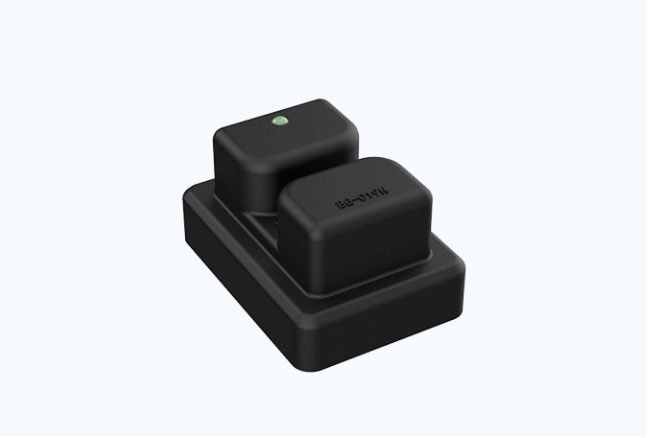
In many OEM designs, a clamp-on flow sensor and a bubble sensor operate in the same tubing section. The flow sensor provides rate or volume information, while the bubble detector provides a separate gas-liquid state check.
Step-By-Step: Choosing a Flow Sensor Format
An engineering team can reduce the number of candidate formats by answering five questions in sequence.
Step 1: Define whether the fluid path can be wetted or must remain untouched
If the liquid must not contact measurement hardware, clamp-on formats such as CG, CPD, or CS should be a starting point. If the fluid path is intentionally disposable, the SU Series single-use flow sensor should be examined. If a wetted inline meter is acceptable, TPD/TPK can be considered.
Step 2: Confirm tubing or pipe size and material
Clamp-on sensors require specific tube diameters and surface types. CG can work with flexible plastic tubing; CPD is suitable for rigid plastic tubing; TPD/TPK are inline devices. In a datasheet, the sensor’s compatible outer and inner diameter ranges should be compared directly with the selected tubing.
Step 3: Compare the flow range and accuracy target
For micro and low flow, CG provides a 0.02–20 L/min range with ±1% accuracy. For flows up to 50 L/min using clamp-on geometry, CPD provides a 0.1–50 L/min range with ±2% accuracy. For inline industrial measurement up to 100 L/min, TPD and TPK provide 0.5–100 L/min with ±2% accuracy. For single-use bioprocess tubing, SU provides 0.05–10 L/min. These figures are starting points for project review.
Step 4: Check temperature, media characteristics, and hygiene requirements
CG has an applicable fluid temperature range of 0°C to 60°C; CPD, TPD, and TPK have an applicable range of 0°C to 90°C. SU also has a 0°C to 60°C fluid temperature range. The fluid should be compatible with the wetted material and should contain no or only a few solid particles for these ultrasonic designs.
Step 5: Define the output and OEM integration level
Some XY-TEK sensors provide analog, pulse, and RS485 outputs; models such as CM use RS485 output and are described as easy to integrate into OEM equipment. For a medical device or process system, the output protocol should match the controller and data-traceability requirements.
Use Cases Across Life-Science and Industrial Systems
Medical Devices
In life-support medical devices, XY-TEK clamp-on ultrasonic flowmeters can be used for precision flow monitoring around dialysis, ECMO, or artificial heart systems. The measurement is non-contact and non-invasive, and the sensor can detect air bubbles in extracorporeal circulation, helping to improve patient safety. Blood, dialysis fluid, medical perfusion liquids, and pharmaceutical solutions are typical media in these systems.
Biopharmaceutical Processes
Biopharmaceutical equipment often uses non-contact clamp-on ultrasonic time-difference measurement for real-time monitoring of purified water, buffer solutions, culture media, and biological liquids. These systems operate in cleanroom environments and require contamination-free measurement. The SU Series single-use sensor is another option when a sterile single-use flow channel is needed.
Industrial Automation, Dispensing, and Spraying
Industrial automation applications use clamp-on sensors for micro-flow precision measurement and control in spraying, dispensing, and cleaning systems. The sensors can detect bubbles, blockage, or abnormal flow and support closed-loop control and data traceability. Process requirements often include high stability, fast response, flow resolution to 0.05 mL/min, and compatibility with small-diameter pipes.
Liquid Cooling, Battery Manufacturing, and Semiconductor Support Equipment
TPD and TPK inline flow sensors address liquid cooling and battery manufacturing loops where the equipment needs direct flow monitoring and no moving parts. Semiconductor fluid-control applications were estimated at USD 5.83 billion in 2024 by Market Research Future, reflecting the wider attention to high-precision fluid handling. For OEMs, inline ultrasonic flow sensing on a coolant line can provide a defined measurement point and real-time data without an impeller.
Flow Sensor Format Comparison
The table below summarizes representative XY-TEK sensor families. Accuracy and ranges should be verified against the specific model datasheet before finalization.
| Family | Format | Measurement Range | Published Accuracy | Typical Integration Notes | Target Industries in Corpus |
|---|---|---|---|---|---|
| CG Series | Clamp-on ultrasonic flow sensor | 0.02–20 L/min | ±1% | Non-invasive measurement; analog, pulse, RS485 outputs; bubble detection | Medical devices, biopharmaceutical, industrial automation |
| CM Series | OEM clamp-on flow meter | 0.05–30 L/min | ±3% | Compact, non-contact liquid measurement; RS485 output | Medical devices, OEM equipment, fluid control, lab equipment |
| CPD Series | Clamp-on non-invasive flow sensor | 0.1–50 L/min | ±2% | No pipe cutting; no moving parts; digital output; air bubble monitoring | Industrial automation, semiconductor, food & beverage, water treatment |
| CS Series | Clamp-on non-invasive industrial flow sensor | 0.1–50 L/min | ±3% | Compact integrated design; digital output compatibility; air bubble monitoring | Semiconductor, water treatment, food & beverage, industrial automation |
| TPD Series | Inline ultrasonic flow sensor | 0.5–100 L/min | ±2% | No moving parts; integrated structure; low maintenance; real-time monitoring | Industrial automation, battery manufacturing, chemical processing, liquid cooling |
| TPK Series | Inline ultrasonic flow sensor | 0.5–100 L/min | ±2% | No moving parts; integrated structure; real-time monitoring | Industrial automation, battery manufacturing, chemical processing, liquid cooling |
| SU Series | Single-use ultrasonic flow sensor | 0.05–10 L/min | ±2% | Single-use measuring channel; biocompatible polymer; supports sterile applications | Biopharma, single-use systems, medical manufacturing, bioprocess |
| BG Series | Ultrasonic bubble detector | Not applicable | Custom detection threshold | Gas-liquid state detection; non-contact bubble monitoring; customizable range and response time | Medical devices, bioprocess, food & beverage dosing, industrial |
Corpus data from XY-TEK product descriptions; use each model datasheet when settling final specifications.
Frequently Asked Questions
Which XY-TEK flow sensor format is intended for sterile or hygienic fluid paths?
If the measurement must support sterile applications and hygienic fluid monitoring, SU Series should be evaluated. SU is a single-use ultrasonic flow sensor made from biocompatible polymer materials with a single-use measuring channel and a measurement range of 0.05–10 L/min. It supports sterile applications and hygienic fluid monitoring. For a non-contact alternative, clamp-on ultrasonic sensors do not touch the fluid, but the system design must still meet the required hygienic or sterility qualification.
What is the difference between clamp-on and inline ultrasonic flow sensors?
A clamp-on ultrasonic flow sensor is mounted on the outside of the tube and measures non-invasively. XY-TEK CG, CPD, and CS are examples of this format. An inline ultrasonic flow sensor such as TPD or TPK is installed in the fluid line and uses an integrated wetted structure; these inline models are made of stainless steel and engineering plastics and cover flows up to 100 L/min.
What accuracy levels can OEM buyers expect from XY-TEK flow sensors?
Accuracy depends on the model. CG has published accuracy of ±1%; CPD, TPD, and TPK have published accuracy of ±2%; CM and CS have published accuracy of ±3%. The selected flow range, fluid type, tubing material, and installation conditions should be confirmed with XY-TEK for a specific project.
Why does an ultrasonic flow sensor use no moving parts?
Ultrasonic flow sensors measure liquid flow through ultrasonic time-difference methods instead of mechanical rotation. Sensor families such as CPD, TPD, and TPK are described as having no moving parts, low maintenance requirements, and no need for pipe cutting in clamp-on versions. This makes the sensing element wear-related maintenance less critical in an OEM device.
How should an OEM start a flow sensor project with XY-TEK?
XY-TEK provides OEM ultrasonic flow sensors and flow meters as well as customized services. The R&D team includes more than 30 engineers focused on ultrasonic flow sensor innovation. To start a project review, contact XY-TEK at global@xy-tek.cn or by telephone at 86-21-33885752.
Conclusion
Flow sensor format selection for an OEM integrator should align with the fluid path, not simply with an accuracy number. XY-TEK offers clamp-on, inline, single-use, and bubble-detection ultrasonic formats so an equipment designer can match the measurement point to contamination risk, tubing size, flow range, temperature, and output protocol. Beginning with this format map can reduce redesign cycles and make the flow sensor specification easier to defend.
Need help selecting a flow sensor format?

XY-TEK operates at Building 7, No. 410 Jinggu Road, Minhang District, Shanghai 200245, China. Email global@xy-tek.cn or visit xy-tek.com for OEM flow sensor inquiries.
Have Questions or Need More Details?
Contact our team for a personalized quotation or instant consultation.
Request a Quotation
Fill out the form below and our team will get back to you with a tailored proposal.
WhatsApp Direct Chat
Prefer to chat in real-time? Message us on WhatsApp for instant assistance & quick answers.
- Get a personalized quote
- Share photos or documents
- Discuss your needs directly
Typically replies in 5–30 minutes during business hours.