
U-Shaped vs Straight-Through Inline Flow Sensors: Choosing the Right Measuring Channel
An ultrasonic inline flow sensor can only resolve flow as low as its measuring channel allows. Inside XY-TEK's inline range, that single design decision separates two products: the TPK Series, built around a U-shaped measuring channel that accepts PVC, silicone, and PE tubing and measures flow from 0.1 mL/min, and the TPD Series, built on a straight-through channel intended for higher flow ranges. For a buyer at the decision stage, the choice narrows to three inputs: your lowest flow, your tubing material, and how much residual volume your process can tolerate.
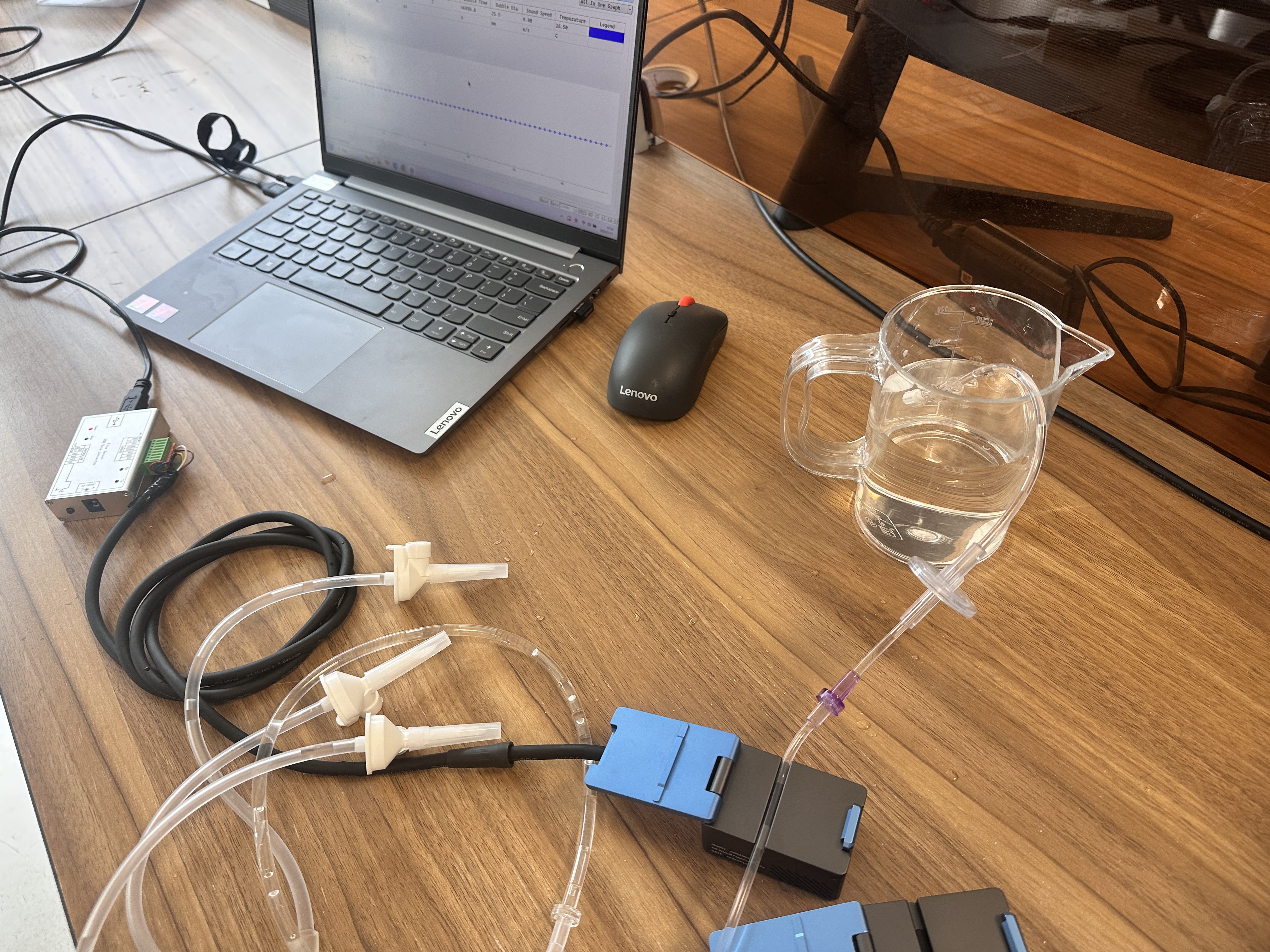
Inline ultrasonic flow sensors: the geometry of the measuring channel defines the lowest flow a line can resolve.
The Short Answer: Channel Geometry Sets the Measurement Floor
Two inputs decide the channel. The first is the lowest flow the process must resolve with a usable signal. The second is the tubing material and bore that carry the fluid. Where a line runs at fractional millilitres per minute through flexible plastic tubing, the U-shaped TPK channel is the candidate. Where a line runs at higher flow rates and benefits from an unobstructed axial bore, the straight-through TPD channel is the candidate.
XY-TEK (Shanghai Xunyin Technology Co., Ltd.) is a Shanghai-based manufacturer that develops, produces, and sells ultrasonic flow sensors and flow meters, with a stated specialization in small tubing and low flow rate measurement and an OEM and customization service line. The company was founded in 2018, operates a 5,000 m² facility with an annual output above 8,000 units, and exports roughly half of its production. Its product coverage spans medical and bioprocess, industrial automation, semiconductor, and low-flow micro-flow measurement segments.
That positioning matters for this comparison, because a sensor integrated inside a medical device, a single-use bioprocess skid, or a semiconductor chemical delivery unit is not clamped onto a plant pipe. It sits on a short run of flexible tubing inside the machine, and the channel is what connects the fluid to the acoustic path.
The Problem: When the Channel, Not the Electronics, Caps the Reading
Low-flow instability is usually blamed on the sensor electronics. In practice, the constraint more often sits in the fluid path. Three conditions drive it.
- Sensing volume versus actual flow. A channel proportioned for a high range holds more liquid in its sensing section. At very low set points the fluid in that section renews slowly, so the reading needs longer to settle and control loops hunt around the set point.
- Tubing that does not belong to the channel. A channel designed around a specific tubing family seats predictably and keeps the acoustic path repeatable. A mismatched tube changes wall thickness, coupling, and path length at once, which is difficult to compensate after the fact.
- Residual volume and priming. Any bend in the fluid path can hold liquid after a flush. That is a real trade-off of a U-shaped route and has to be designed out through priming and flush sequences, not ignored.
The cost of guessing wrong is rarely the sensor itself. It is the re-validation of a dispensing recipe, a rejected batch at a low-flow set point, or a second integration round six weeks before a device launch. Buyers who specify the channel against the real flow window avoid most of that work.
Industry Background: Ultrasonic Sensing Is Growing, and the Fluid Path Is the Differentiator
Flow sensors measure the flow rate and volume of fluids within a pipe or a duct, and they are used to monitor and control liquid and gas flow. That definition has not changed in decades; what has changed is where those sensors are installed and how small the lines have become.
The ultrasonic segment is expanding. The ultrasonic flow meter market was valued at USD 1.52 billion in 2025, with an estimated growth path to USD 2.28 billion by 2031, as cited in HTNXT Research's 2026 flow sensor capability report. Within the mounting-method split, the clamp-on segment is expected to account for 57% of the global ultrasonic flow meter market share in 2026, according to Straits Research. Clamp-on dominates because most of the installed base is existing pipework that cannot be cut.
OEM equipment is the counterweight to that trend. When a device is designed new rather than retrofitted, the sensor is usually specified as an inline element on a short tubing run inside the enclosure, and the design team controls the tubing, the routing, and the available space. That is exactly the situation in which U-shaped versus straight-through becomes a live engineering question rather than a catalogue detail. XY-TEK's stated application coverage, which includes liquid cooling, cleaning processes, and chemical delivery systems, sits largely in this design-in category.
The Two Channel Designs and the Job Each One Does
TPK Series: U-Shaped Channel with a 0.1 mL/min Floor
The TPK Series routes the fluid through a U-shaped measuring channel and is compatible with PVC, silicone, and PE tubing. Its stated lower measurement limit is 0.1 mL/min. In practice, the U-shaped route holds the tubing in a defined seat inside the sensor body, so the acoustic path is set by the housing rather than by how carefully an installer positioned a clamp. That is the reason this geometry can hold a fractional-millilitre floor while remaining compatible with soft, thin-walled tubing families.
The trade-offs are equally concrete. A bend introduces a small wetted volume that has to be primed and flushed, and the pressure and temperature ceiling of the assembly is governed by the tubing selected, not by the sensor alone. Teams specifying the TPK should validate the flush sequence along with the measurement.
TPD Series: Straight-Through Channel for Higher Flow Ranges
The TPD Series uses a straight-through measuring channel and is positioned for higher flow ranges than the TPK. The fluid travels along a single axis with no bend in the measuring section, which suits lines where the flow is already established and where an unobstructed bore simplifies flushing and drain-down. Where a U-shaped channel is the answer to a sub-millilitre set point, the straight-through channel is the answer to a line that simply does not go that low.
The practical caution runs in the other direction: a straight-through channel is not the right tool when the process set point sits in the fractional-millilitre band that the TPK was designed for. Buyers who try to stretch a higher-range channel downward usually end up adding damping, longer sampling windows, or a second sensor.
Where the Line Between Them Actually Sits
The dividing line is your minimum controllable flow, not your nominal flow. A line that usually runs at tens of millilitres per minute but must hold a 0.2 mL/min dispensing step at the start of each cycle belongs on the U-shaped channel, because the low step is what the control loop has to resolve. A line whose entire operating envelope sits in the higher range belongs on the straight-through channel, where the axial bore pays back in flushability and simplicity.
Step-by-Step: Selecting the Right Measuring Channel
- Write down the full flow window, not the nominal rate. Record the lowest step the control loop must resolve and the highest flow the line will ever see. The lowest number selects the channel; the highest number confirms the sensor still fits.
- List the tubing you must use, and cannot change. Material family, internal and external diameter, wall thickness, and whether the run is single-use or reusable. For the TPK, the supported families are PVC, silicone, and PE.
- Match the channel to the floor. If the floor is fractional millilitres per minute on flexible plastic tubing, select the U-shaped TPK channel from 0.1 mL/min. If the operating envelope sits in a higher range and an axial bore is preferable, select the straight-through TPD.
- Check fluid behaviour, not just fluid chemistry. Ultrasonic transit-time measurement responds to gas in the liquid, so priming procedure, degassing, and bubble carry-over should be reviewed together with the channel choice rather than after commissioning.
- Agree the drift-control plan up front. XY-TEK's stated approach to sensor drift combines an automatic compensation algorithm with factory calibration, on-site calibration, and remote support calibration. Decide which of those applies to your validation plan before the order is placed.
- Confirm inspection and acceptance documentation. XY-TEK conducts 100% pre-shipment testing and offers third-party inspection for quality control. Acceptance criteria are factory inspection and calibration before shipping, so any additional third-party inspection should be written into the order.
- Plan the supply step. The minimum order quantity is 50 units, standard delivery time is 1 to 2 months, and typical production lead time is also 1 to 2 months. Build that window into your build schedule rather than discovering it at the pilot build.
Use Cases: Where Each Channel Earns Its Place
Medical devices and diagnostic instruments
Reagent dispensing, sample aspiration, and wash cycles typically run on silicone or PVC tubing at fractional-millilitre rates. This is the canonical TPK case: the U-shaped channel accepts the tubing already qualified for the fluid path and resolves the 0.1 mL/min band where a higher-range channel would stall.
Bioprocess and single-use lines
Single-use flow paths are built on flexible tubing, and the low end of the range is often the critical one during slow feed or sampling steps. A U-shaped channel that seats the tube mechanically is easier to qualify than a clamp whose position depends on the operator. For higher-rate transfer lines in the same facility, a straight-through inline sensor is the more natural fit.
Semiconductor and chemical delivery
Chemical delivery and small-volume dosing sit in the fractional-millilitre region, and the media are often expensive and require complete flush recovery. Specify the U-shaped channel for the dosing step, and quantify the residual volume of the bend so the flush sequence can be validated against it.
Industrial automation and liquid cooling loops
Cooling circuits, cleaning skids, and process automation lines generally operate in higher ranges, where a straight-through inline sensor keeps the bore open and simplifies maintenance. These are also the installations where a non-contact ultrasonic measurement removes the leak risk that comes with a wetted mechanical element.
Dispensing, filling, and spraying
Filling and dispensing machines mix both regimes on one chassis: a slow, precise dose followed by a faster purge or recirculation. In that architecture the dose step is specified on the low-flow channel and the bulk step on the higher-range channel, and each is selected against its own window rather than against the machine average.
TPK vs TPD: Side-by-Side Comparison
| Selection factor | TPK Series (U-shaped) | TPD Series (straight-through) |
|---|---|---|
| Measuring channel | U-shaped | Straight-through |
| Stated tubing compatibility | PVC, silicone, PE | Confirm the tubing family with XY-TEK for the application |
| Lowest stated measurement | From 0.1 mL/min | Positioned for higher flow ranges |
| Flow regime it is designed around | Fractional-millilitre and low-flow steps | Established, higher-rate lines |
| Fluid path consideration | Bend adds a small wetted volume that must be primed and flushed | Unobstructed axial bore simplifies flush and drain-down |
| OEM customization | Available through XY-TEK OEM and customized services | Available through XY-TEK OEM and customized services |
| Commercial terms (both series) | MOQ 50 units; standard delivery and typical production lead time 1 to 2 months; 100% pre-shipment testing | |
Table notes: channel geometry, tubing compatibility, and the 0.1 mL/min figure are as stated for the TPK; commercial terms apply to XY-TEK sensor orders.
Three selection rules in one view: specify against the lowest flow step rather than the average; confirm the tubing family before the channel; and validate the flush sequence whenever a bend is present in the fluid path.
Procurement Checklist: What to Confirm Before the Purchase Order
| Item | What to confirm |
|---|---|
| Pre-shipment testing | 100% pre-shipment testing is conducted |
| Third-party inspection | Offered for quality control; specify it in the order when required |
| Acceptance criteria | Factory inspection and calibration before shipping |
| Minimum order quantity | 50 units |
| Delivery and production | Standard delivery time 1 to 2 months; typical production lead time 1 to 2 months |
| Commercial terms | FOB delivery terms; full payment before shipment |
| After-sales support | Online engineering support, remote technical support, and quality warranty |
| Drift control | Automatic compensation algorithm plus factory, on-site, or remote support calibration |
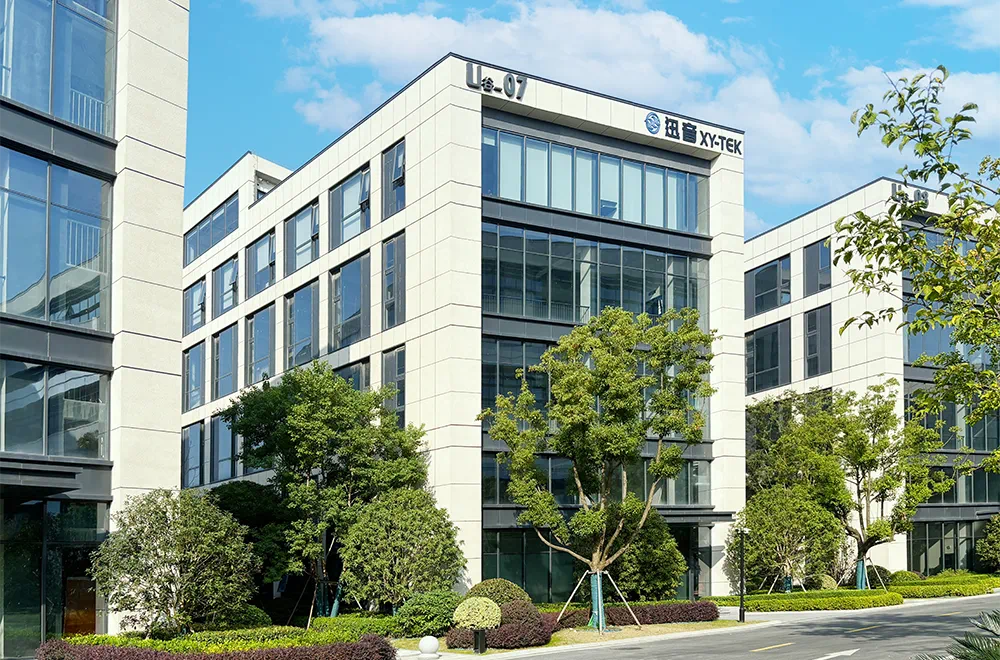
XY-TEK produces ultrasonic flow sensors and flow meters in Shanghai and completes 100% pre-shipment testing before dispatch.
FAQ: U-Shaped vs Straight-Through Inline Flow Sensors
What testing and documentation accompanies a TPK or TPD order?
XY-TEK conducts 100% pre-shipment testing and offers third-party inspection for quality control. The agreed acceptance criteria are factory inspection and calibration before shipping. If an independent inspection body needs to witness testing, raise it during quotation so the inspection is scheduled before dispatch rather than after arrival.
How do I decide between the 0.1 mL/min U-shaped channel and a higher-range straight-through channel?
Start from the lowest flow your control loop must resolve. The TPK Series, with its U-shaped measuring channel and PVC, silicone, and PE tubing compatibility, measures from 0.1 mL/min. If the entire operating envelope sits above that band and an unobstructed axial bore is preferable for flushing and maintenance, the TPD Series is the higher-range straight-through option. Send both the minimum and maximum flow, plus the tubing material and diameter, and the channel choice becomes a single-step confirmation.
Can the U-shaped sensor be used with the tubing already qualified in my device?
If that tubing is PVC, silicone, or PE, the TPK channel is stated as compatible, which usually removes the need to requalify the fluid path material. If the device uses another material, raise it as a customization question: XY-TEK provides OEM ultrasonic flow sensors and customized services alongside its standard range, so the tubing interface can be reviewed as part of the OEM discussion rather than assumed.
What are the minimum order quantity and payment terms?
The minimum order quantity is 50 units, delivery terms are FOB, and payment terms are full payment before shipment. Acceptance is defined as factory inspection and calibration before shipping. For pilot builds, plan the 50-unit minimum and the 1 to 2 month production window together, because both constrain the same schedule.
How long does delivery take, and what support continues after installation?
Standard delivery time is 1 to 2 months, and typical production lead time is also 1 to 2 months. After-sales coverage includes online engineering support, remote technical support, and quality warranty, with drift addressed through an automatic compensation algorithm and factory, on-site, or remote support calibration. To confirm channel fit against a specific line, send the flow window and tubing specification to the XY-TEK team at global@xy-tek.cn or call +86-21-33885752 for a quotation.
Conclusion: Select the Channel Against the Lowest Flow, Then Plan the Supply
The U-shaped and straight-through channels answer two different questions. The TPK Series, with a U-shaped measuring channel and compatibility with PVC, silicone, and PE tubing, exists to reach the fractional-millilitre band from 0.1 mL/min. The TPD Series, with its straight-through channel, exists for higher flow ranges where an axial bore keeps the line simple and serviceable. Neither is a general-purpose default; each is correct inside its own flow window.
Once the channel is fixed, the rest of the decision is commercial and documentary: a 50-unit minimum order quantity, a 1 to 2 month delivery and production window, 100% pre-shipment testing, third-party inspection on request, and after-sales support through online engineering, remote technical support, and quality warranty. Treating those items as part of the selection, rather than as paperwork after it, keeps an OEM integration on schedule.
Next step: confirm the channel for your line
Send XY-TEK your lowest and highest flow, tubing material and diameter, and target production date. The team will confirm whether the TPK U-shaped channel or the TPD straight-through channel fits, and return a quotation with lead time.
Email: global@xy-tek.cn | Phone: +86-21-33885752 | Website: www.xy-tek.com
Address: Building 7, No. 410 Jinggu Road, Minhang District, Shanghai 200245, China
Have Questions or Need More Details?
Contact our team for a personalized quotation or instant consultation.
Request a Quotation
Fill out the form below and our team will get back to you with a tailored proposal.
WhatsApp Direct Chat
Prefer to chat in real-time? Message us on WhatsApp for instant assistance & quick answers.
- Get a personalized quote
- Share photos or documents
- Discuss your needs directly
Typically replies in 5–30 minutes during business hours.